The usual triggers
The clearest trigger is height. Dutch practice, codified in NEN 8100, expects a wind study for buildings taller than 30 metres, and a reasoned judgement between 15 and 30 metres if the situation looks sensitive: an exposed site, a slender shape, an open corner towards the prevailing wind. Belgian municipalities increasingly follow the same logic, and several cities abroad, London most prominently, have made wind assessments a formal part of the planning file for tall buildings.
Height is not the only trigger. A rooftop extension that changes how wind reaches a shopping street, a new block that closes or opens a passage, a tower added near an existing windy square: we have done permit studies for all of these, including buildings well under 30 metres.
When in the design to ask
The economics are simple: the earlier wind is checked, the cheaper the fix. At the massing stage, a problem is solved by moving or reshaping volumes, which costs nothing. After the permit design is frozen, the same problem is solved with canopies and screens, which cost money and change the architecture. After completion, it is solved with retrofitted mitigation, which is the most expensive and least elegant option.
A first coarse assessment on an early massing model is quick, and it tells you whether wind will be a design factor at all. The detailed study for the permit file comes later, on the developed design.
What you receive
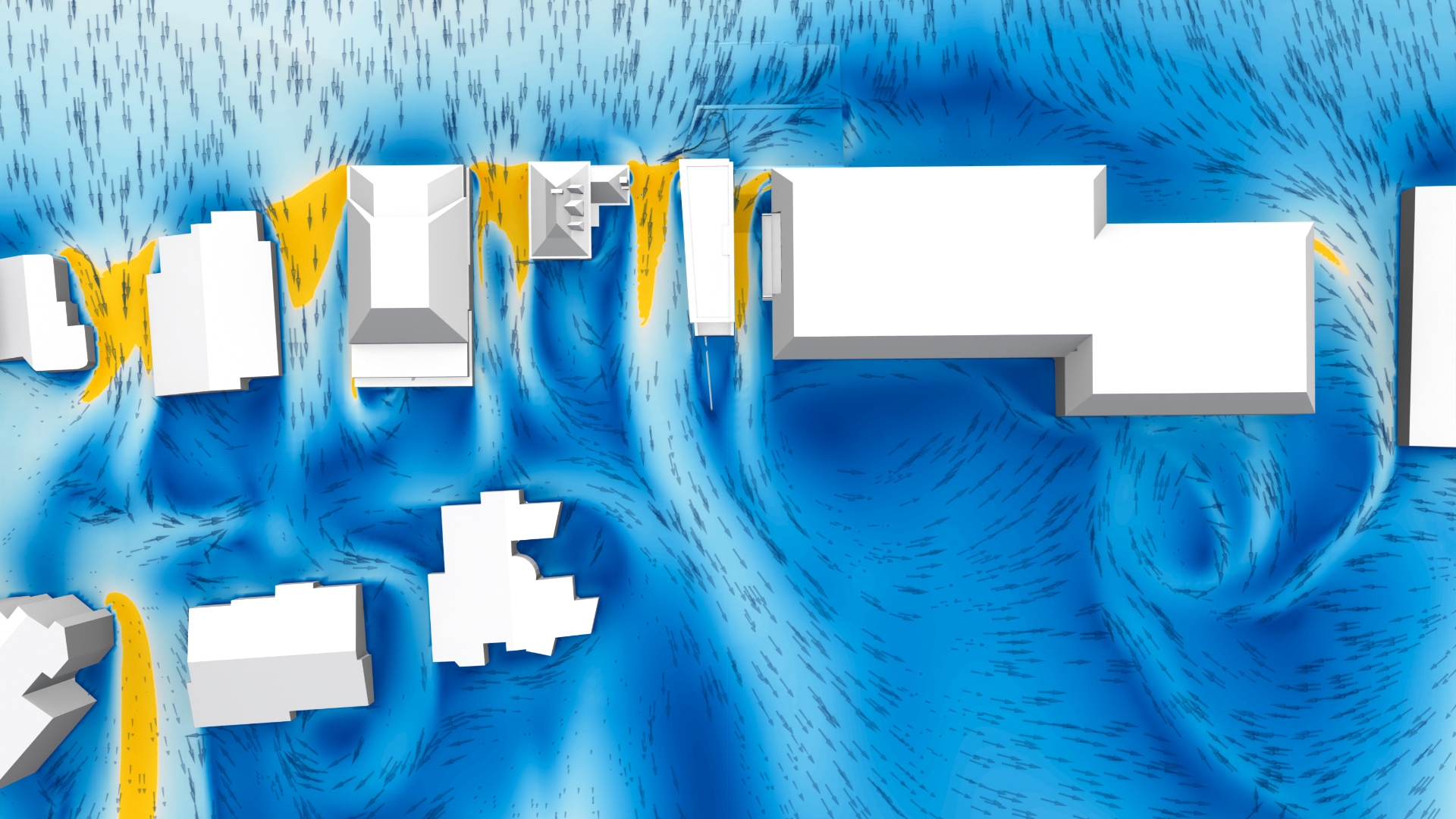
A wind study delivers comfort and safety maps of the whole site at pedestrian height, graded against a recognized standard (NEN 8100 or the Lawson criteria, depending on the jurisdiction), an interpretation of where the design performs and where it does not, and, where needed, mitigation advice that has been tested in the same model, not just suggested.
For the permit, the report documents the method, the wind climate data and the criteria, in the format reviewers expect. That is what makes it evidence rather than opinion.
Where this shows up in our work