
Why a city wrote its own rules
The Square Mile concentrates one of the densest clusters of tall buildings in Europe, and every new tower changes the wind for the streets and buildings around it. After years of assessments arriving in inconsistent formats, and growing attention to pedestrian and cyclist safety, the City standardized what a wind study must contain to be accepted.
What the guidelines require
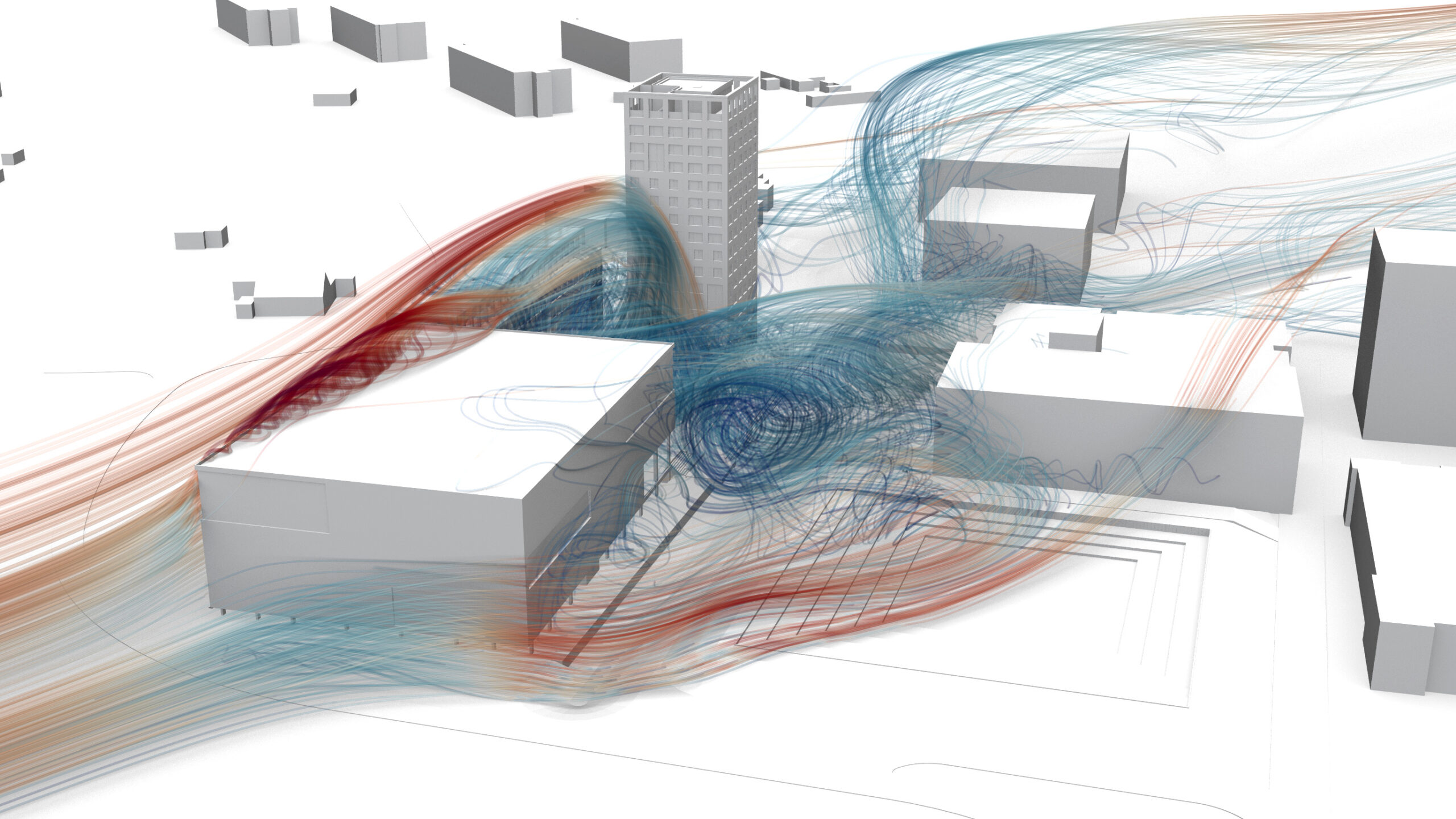
Wind must be assessed from the early design stages, not as a final check. Comfort is graded with Lawson-based classes. Safety gets explicit attention, including cyclists, whose stability in gusts is lower than that of pedestrians. The assessment must include the cumulative context: existing buildings plus consented schemes nearby, not the design in isolation.
Crucially, the guidelines also set quality requirements for the methods themselves: documented, validated CFD or wind tunnel procedures rather than a black box. A pretty picture without a described method does not pass.
What it means outside London
The guidelines turned good practice into a checkable requirement, and other cities are moving the same way; Dutch municipalities already lean on NEN 8100, and several European cities now request microclimate evidence for tall or sensitive projects. For a developer the practical lesson is consistent everywhere: wind evidence is becoming part of the permit, and it is far cheaper to produce it while the design can still respond.
Where this shows up in our work