A facade works like a sail
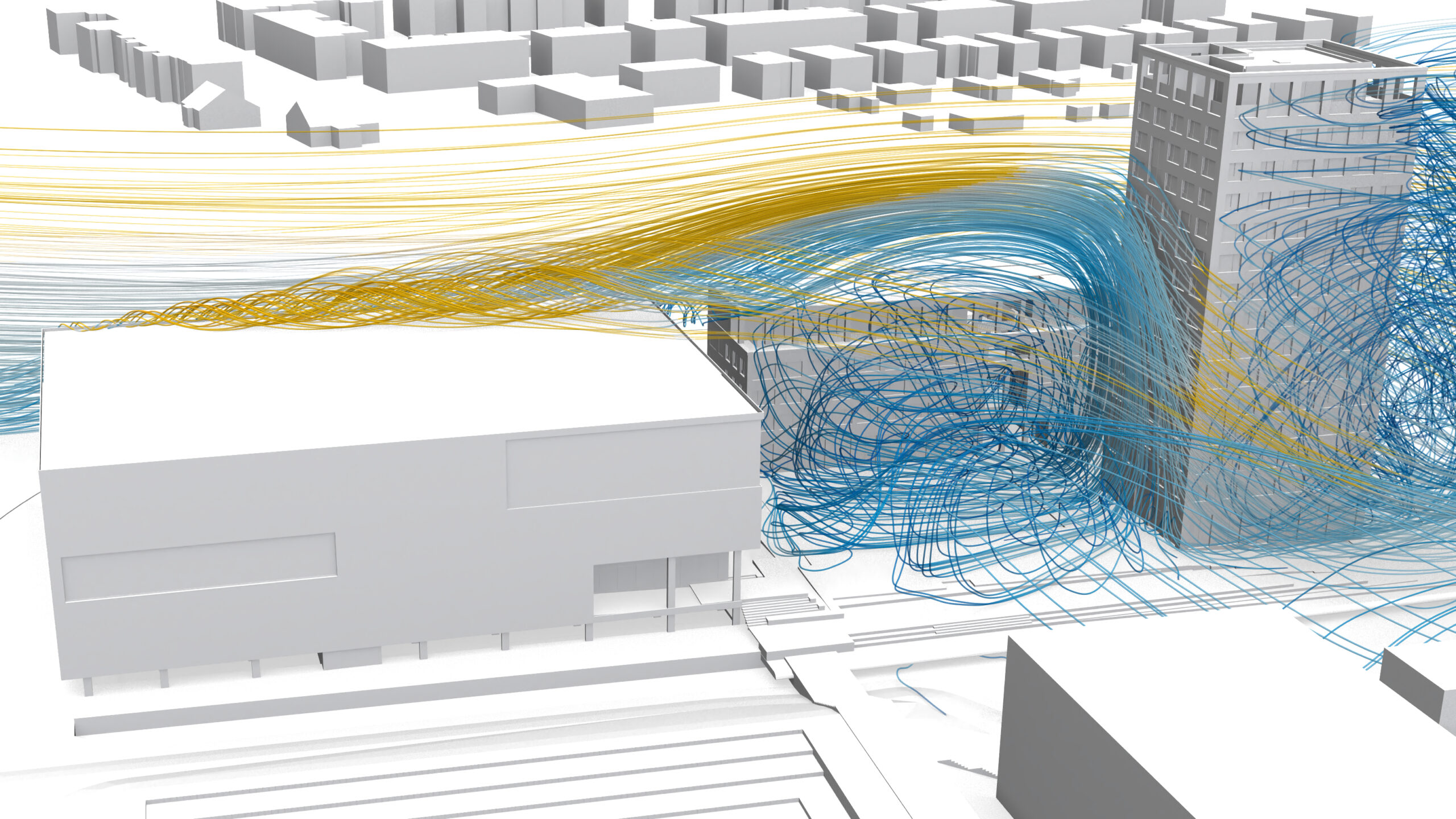
Wind gets faster with height, so the upper floors of a tower stand in much stronger wind than its base. When that wind hits a tall facade, it stagnates at roughly two thirds of the building height and divides: part escapes over the roof and around the sides, and a substantial part is deflected downwards along the facade.
That descending stream is the downwash. Wind that was blowing at 50 or 80 metres arrives at the pavement with much of its speed intact, which is why the base of a tall building is often the windiest place in the neighbourhood, and why the problem appears only after the building is standing.
Corners are the hotspots
The flow accelerates around building corners, and where downwash and corner streams combine, gust speeds at ground level can approach the safety limits of the standards. In our studies, the failing points of a tall building are almost always its upwind corners and the entrances placed near them.
A rule of thumb from practice: below roughly 25 metres of building height downwash rarely dominates. Above it, and especially when a tall facade faces the prevailing wind across open space, expect it and plan for it.
What interrupts it
Downwash responds well to design. A generous canopy catches the descending flow before it reaches people; the wider it projects, the more it catches. A podium widens the base so the fast air is delivered onto a roof instead of a pavement. Setbacks break the facade into shorter runs. Porous screens and dense planting at corners weaken the corner streams.
Which measure is right, and how large it must be, is a quantitative question. In a simulation each option is tested in the same wind, so the choice is made on numbers, not intuition.
Where this shows up in our work