
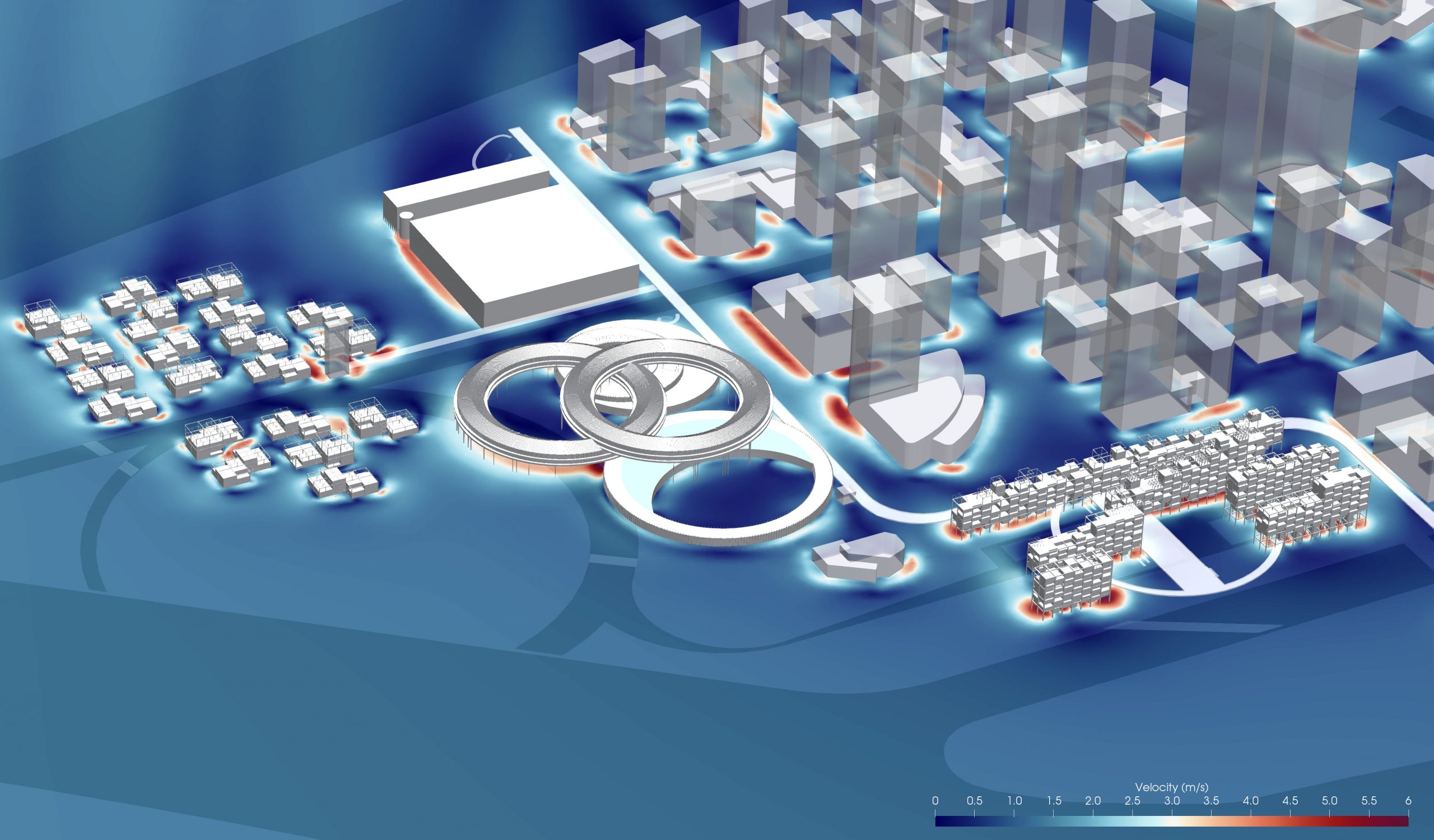
One idea: comfort depends on activity
Tom Lawson, professor at the University of Bristol, formalized a simple observation: there is no single acceptable wind speed, because acceptability depends on what people are doing. Air that goes unnoticed on a brisk walk makes a terrace unusable.
In the widely used LDDC form of the criteria, each activity has a threshold that may be exceeded at most 5 percent of the time: about 2.5 metres per second for long outdoor sitting, 4 for standing and short sitting, 6 for strolling, and 8 for purposeful walking. Locations windier than that are classed uncomfortable for everything.
What the classes give a designer
A Lawson assessment classifies every point of a site by the most demanding activity it can host, and the map reads directly as a programme: this frontage supports a cafe, that plaza corner suits standing but not sitting, this route is fine for walking. Reviewers in London expect exactly this map, and the City of London guidelines are built on it.
A separate safety criterion tracks strong winds, requiring that speeds around 15 metres per second occur no more than about once a year. A point can pass comfort and still fail safety, which is precisely the case that matters at tower corners, and for cyclists, who are more sensitive to sudden gusts than pedestrians.
Lawson or NEN 8100?
The two frameworks measure the same physics with different bookkeeping, and the choice is usually made by the jurisdiction: NEN 8100 in the Benelux, Lawson in the UK and on many international projects. We run both, and on request grade the same simulation against both, so a design team working across borders sees one consistent picture.
Where this shows up in our work