The measures that earn their cost
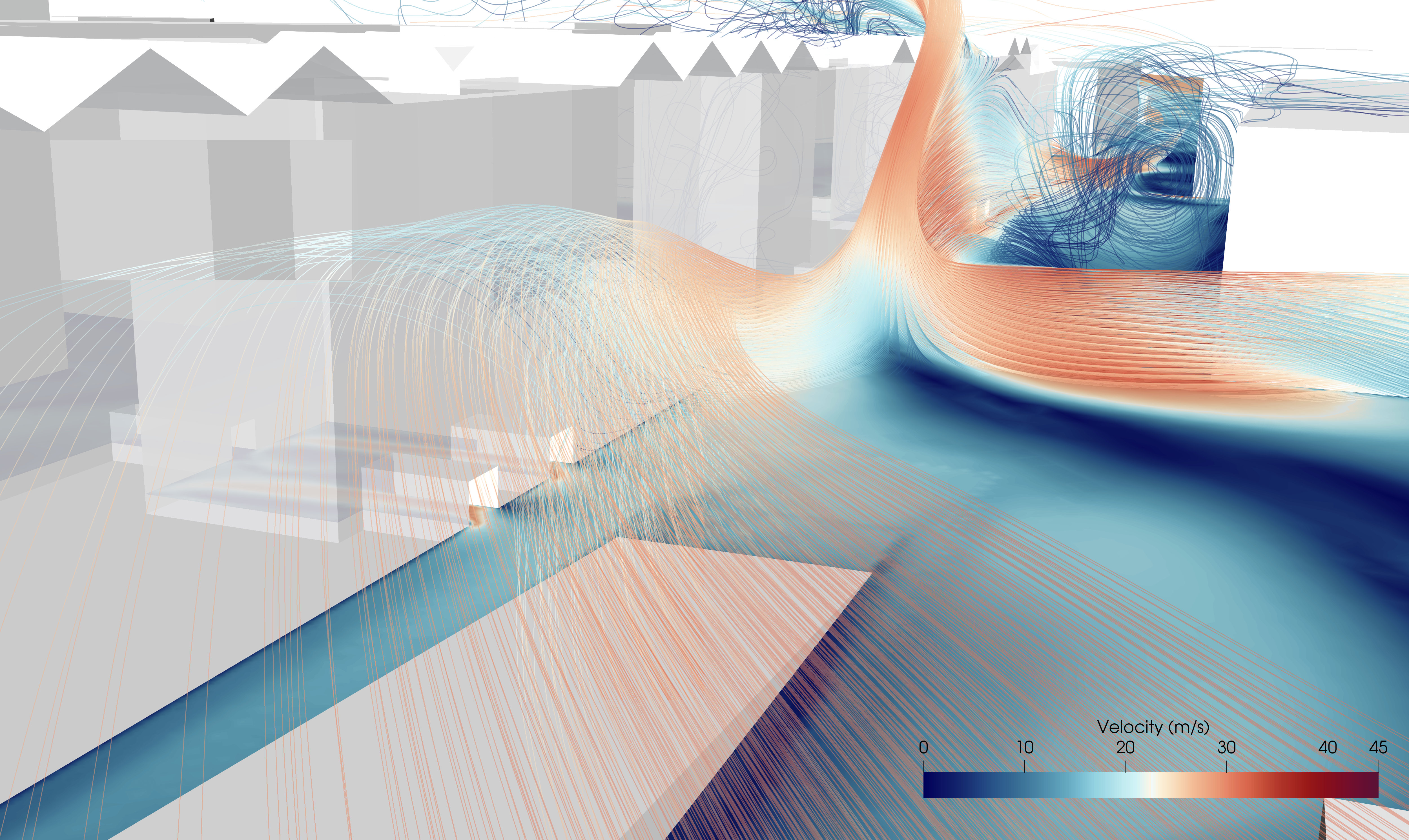
Canopies are the workhorse: placed over an entrance or along a facade, they intercept downwash before it reaches people, and their effect grows with projection depth. Podiums solve the same problem at the massing stage by delivering the fast air onto a roof. On terraces and balconies, a solid or partly porous balustrade of sufficient height creates a calm zone deep enough to sit in.
Vegetation works when it is porous and dense: a row of conifers or a layered hedge takes energy out of the wind over a distance. A single line of thin, deciduous trees looks reassuring in a render and does very little in January, when the wind is strongest and the leaves are gone.
The classic mistake: solid walls
A solid windbreak stops wind locally and creates turbulence just behind itself, often moving the problem a few metres downstream rather than removing it. Porous screens, around half open area, perform better: they slow the wind over a longer distance without generating strong recirculation. This is one of the most consistent findings across our studies, and one of the least intuitive for designers.
Test before you build
Every mitigation measure interacts with the geometry around it, so the honest answer to "will this canopy be enough?" is a simulation of that canopy, in that wind climate, on that building. In our projects the mitigation options are tested in the same model as the original problem, and the report shows the comfort grades before and after. That turns mitigation from a negotiation into a measurement.
Where this shows up in our work